Showing posts with label Fantasy AGE. Show all posts

Tuesday, October 9, 2018

Fantasy AGE - Gargoyles

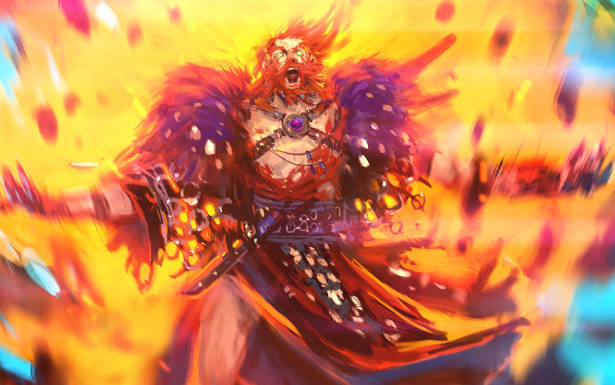
Had a random thought today about how would Disney's Gargoyles look like if written for Fantasy AGE. After about 10-20 minutes of writing based solely from my memory of the show, this is the result. I could of spent more time writing a full description, including details on the different forms and sizes gargoyles can take. But I thought it would be best to make a short post and spend time on other projects...like AGE of Tamriel.

For those wondering about that, I am still writing it but I am also trying not to completely burn-out on it. Just having a hard time fighting the urge to write up new mechanics for every little thing. But it is slowly coming along.


GARGOYLE


  • Add 1 to your Constitution ability.
  • Pick one of the following ability focuses: Constitution (Stamina) or Willpower (Courage).
  • You have Dark Sight out to 20 yards.
  • You have Glide Wings and a Glide Speed of 10 yards (minus armor penalty if applicable). While gliding you have access to Flying actions. You can glide up to 10 minutes before needing to land and rest. However, you can push yourself and continue gliding for an extra 10 minutes with a TN 15 Constitution test, up to 60 minutes. After 60 minutes or on a failed test, you got 1 minute to land before you fall out of the sky from exhaustion. You cannot glide again until you take a "Breather" (see "Health & Healing" on page 39 in the Fantasy AGE basic rulebook).
  • You have Talons that allow you to deal 1d3+1 damage with your brawling attacks. In addition, you can choose to either deal non-lethal or lethal damage with your brawling attacks.
  • You are Threatening. You can perform the Threaten combat stunt for 1 SP.
  • You enter into Stone Hibernation at dawn every day. You turn into a solid stone statue, regardless of wherever and in whatever position you are currently in. While in this state, you are unaware of your environment and cannot move, and you do not need to breathe, eat, or drink. Your Defense is 10 and have an Armor Rating of 6. After awakening from this hibernation you fully recover all lost Health and from any natural poisons that were affecting you. If you are reduced to 0 Health while in this state, you die.
  • You can speak and read the Common Tongue and Gargoyle.
  • Roll twice on the Gargoyle Benefits table for additional benefits. Roll 2d6 and add the dice together. If you get the same result twice, re-roll until you get something different.

2d6 RollBenefit
2+1 Strength
3–4Focus: Perception (Smelling)
5Focus: Strength (Climbing)
6Focus: Strength (Might)
7–8+1 Willpower
9Focus: Strength (Jumping)
10–11Focus: Accuracy (Brawling)
12+1 Fighting

Saturday, January 27, 2018

AGE of Tamriel - The Dark Curse


I have a bit of a love/hate relationship with Fantasy AGE. On one hand, I like the system's straight-forward mechanics, how easy it is to write for, and I really like the High Swale setting in the back of the book; remind me of TSR's old Thunder Rift setting for AD&D. On the other hand, I hate the lack of support it has been given (or lack thereof), how its magic arcana system makes it hard to have a D&D-style wizard with many spells, and wishing they would open the system up to third-party support.

In writing AGE of Tamriel, I have had a hard time wracking my brain on various issues of trying to bring the Elder Scrolls setting to Fantasy AGE. Once I had decided to fit Tamriel into the AGE system, instead of the other way around, I found it much easier to write for. However, as one can see how long it has been since my last AoT post, I haven't had the motivation to keep writing for it.

Lately I have been trying to change that. So here is my write-up for vampirism for AoT. My idea for vampirism is to treat it as a talent, with a vampire-related specialization and two additional talents for those wanting more vampiric powers. My impressions of these rules tell me that they seem very overpowered, especially if all talents are taken. Hopefully I can trim down that power and make it more balanced.

<< AoT: Vampirism PDF >>

Tuesday, August 8, 2017

AGE of Tamriel - Spells Preview (Illusion, Mysticism, Restoration)

And here are the finally three schools of magic; Illusion, Mysticism, and Restoration. << PDF Link >>

Sunday, August 6, 2017

AGE of Tamriel - Spells Preview (Destruction)

Today's post is another spell preview is the Destruction school of magic: << PDF Link >>

Out of all the schools of magic in AoT, Destruction has the largest list of spells. Most of the spells are elemental in nature, and many of them are just variations on base spell form (X Weapons, X Storm, Wall of X, etc). While that made it easier to write, it also made the school feel rather bland. So, I tried looking at the earlier Elder Scrolls games for ideas for non-elemental spells. From what I have read, most of the earlier spells also fell into that variation-on-a-spell trap. But I did add a few unique spells into the mix, so at least there is some variation within the school.

Friday, August 4, 2017

AGE of Tamriel - Spells Preview (Alteration and Conjuration)

Quick post about my AGE of Tamriel project.

It is coming along okay, if a bit slow. Spent most of the time writing out all the spells for each school of magic, as well as tidying up the specializations. I have also added some small rules for item durability and repairing items. Plus the usual minor edits here and there.

Anyway, here is a preview detailing the spells for magic schools of Alteration and Conjuration.

<< PDF Link >>

Sunday, June 4, 2017

AGE of Tamriel - Special Materials

Been spending the last few days going over the rules for special materials, not to mention which materials from the Elder Scrolls games I wanted to include. Initially, I tried to give flat modifiers, but with how minimal Fantasy AGE details arms and armor, I found it quite difficult to make each material feel unique. After some time thinking (and looking into FA's magic rules), I decided to try to connect each material to a combat stunt, leaving flat bonuses to those the most powerful, or I didn't have a good idea for.

With all that said, here is what I have currently settled for:


Special Materials


The Elder Scrolls setting has several unique materials in which arms, armor, and other items can be crafted from. These special materials can be used to create Masterwork items, items that are superior to your everyday items.
Special materials come in four grades; Common, Uncommon, Rare, and Legendary. An item's grade determines how hard it is to craft, a character must have an equivalent degree in the Master Crafter talent to work with the material. The only Legendary material is Daedric, it cannot normally be crafted by characters, it is included here for completeness. Outside of crafting, Uncommon and higher Masterwork items should be acquired as loot during adventures, or as rewards.

Wednesday, April 19, 2017

Current progress on AGE of Tamriel

It has been nearly a year since the last time I put up the preview PDF for my AGE of Tamriel project. It is kinda crazy that it has been that long and I feel like I haven't gotten any closer to finishing this thing. With this project I have seen a tiny amount of the work required to seriously write something, let alone trying to make it look pretty. Much respect to those who do this for a living or as a hobby.

Since that update a year ago, I have made many minor tweaks here and there, had made major rules changes, and created a few more rules. What follows is a small list of the major changes since the last update:

• Completely new color layout.
• New weapon group, items, and basic rules for special materials.
• New/revised talents.
• Written the game benefits for most/all specializations.
• Created alchemy rules.
• Beginnings of the enchanting rules similar to alchemy.
...and
• Tons of frustration in dealing with the magic rules!

And with that list, I feel like I really haven't done much in the past year. Guess I should go back to working on it.

< Preview PDF >

Friday, April 14, 2017

Fantasy AGE - The Inkvasion has come!

As I was writing up the miqo'te for Fantasy AGE, I spent time looking though my old files and trying to see if I had already done so. As I was looking I ran across my notes for a “squidian” character race. This character race was written purely for fun and not meant to be remotely serious. And I thought it would be interesting to see people think of it.

Squidian

Standing four-foot-nothing, squidians are a small humanoid race that dwell under the seas and oceans of the world. They resemble half-sized humans with tentacles for hair and other traits similar to squids.

If you choose to play a squidian, modify your character as follows:

• Add +1 to your Strength.
Amphibious: You can breathe both in and out of water. However, you have a -2 penalty on Constitution tests when in a dry and/or hot environment, like a desert or in a hot spring.
Bio-Luminescence: You can produce a bio-luminescent light from your body. Your normal state is a dull glow, but with a Minor action, you can raise its intensity to light up a 6-yard radius for 1 + Constitution minutes. If you are under stress or subject to a jump-scare, you have to make a TN 13 Willpower (Self-discipline) test or temporarily lose control of your bio-luminescence for 1d6+1 rounds. Regaining control requires another Willpower (Self-discipline) test. If you are knocked unconscious or otherwise incapacitated (or sleeping), your bio-luminescence drops to a dull glow.
Ink Jet: You can spew forth an inky liquid. When underwater you can produce a 6-yard radius cloud of inky darkness that obscures sight for anyone inside. Outside of water, you can blind an enemy with ink to the face for 1d6+1 minutes. This is a ranged attack that uses Accuracy (Ink jet) focus against the enemy's Defense, and has a range of 4/8. While Blind, they automatically fail Perception (Seeing) tests and have a -2 penalty to Defense and attack rolls, but they can remove the ink with a Major action. However, each time you use this ability you lose 5 Health.
Underwater Dark Sight: You can see in the dark out to 20 yards while underwater.
Natural Swimmer: You start with the Constitution (Swimming) focus.
Speed: You have a Speed of 10 + Dexterity (minus armor penalty if applicable) while on land, but have a Swim Speed of 12 + Strength (minus armor penalty if applicable).
Tentacle Hair: Your hair is really tentacles! With a Major action, you can stretch out your tentacles to manipulate an object or perform a brawling attack out to 6 yards. When using your tentacles in this manner, you suffer a -2 penalty to any ability tests made. If used in combat, your tentacles have a Defense equal to yours -2, and Health equal to one-half your total Health. When your tentacles reach 0 Health, you cannot use them until they grow back in 1d6+1 days.
All-Thumbs: Living underwater isn't like life on land, so you suffer a -2 penalty on Communication tests when interacting with non-squidians, and on any ability tests when dealing with more complex non-squidian technology (cars, computers, etc). Gaining the Communication (Non-squidian) focus eliminates the Communication penalties, while the Intelligence (Non-squidian lore) eliminates the technology penalty.
• You speak and read Squiddle and the Common Tongue.

Thursday, April 13, 2017

Fantasy AGE - Final Fantasy XIV Miqo'te


( Image Source: http://sandracharlet.deviantart.com/art/FFXIV-Gally-329637161 )

Miqo'te

The Miqo'te are a humanoid race with feline characteristics that immigrated to Eorzea during the Age of Endless Frost, a time when the seas turned to ice and passage over them became possible. Since their arrival, the Miqo'te have diverged into two physically distinguishable groups: the diurnal Seekers of the Sun and the nocturnal Keepers of the Moon.
The miqo'te have diverged into two separate ethnicities: the Seekers of the Sun and the Keepers of the Moon. While the diurnal Seekers of the Sun worship Azeyma the Warden with their culture revolving around the sun, the nocturnal Keepers of the Moon prefer the shroud of night and offer their piety to Menphina the Lover.
Comparatively few in number, miqo'te maintain an insular mentality within their clans, tending to avoid contact with the other races. Many individuals lead isolated lifestyles, even when living in the more populous cities.
The Seekers are widely regarded as quickwitted and prone to action, and many bore easily. The Keepers are known for their reticent and brooding personalities, but are also respected and sometimes feared for their tenacity.
Their natural dexterity and quick wit makes them outstanding archers and pugilists.

Seeker of the Sun

The self-proclaimed Seekers of the Sun are the diurnal clan of the Miqo'te race. Their preference for the warm light of day pervades all aspects of their culture, as is apparent in their devout reverence for Azeyma, the Warden, goddess of the sun.
Though relatively few in Eorzea, a small number of them have been accepted into everyday life by the other races in the port city of Limsa Lominsa. Others are known to make their home in the region of the Sagolii Desert.

Playing a Seeker of the Sun

If you choose to play as a Seeker of the Sun, modify your character as follows:
• Add 1 to your Dexterity.
• Pick one of the following ability focuses: Dexterity (Acrobatics) or Perception (Hearing).
• Your Speed is 12 + Dexterity (minus armor penalty if applicable).
• You can speak Miqo'te and Common Tongue.
• Roll twice on the Seeker of the Sun Benefits table for additional benefits. Roll 2d6 and add together. If you get the same result twice, re-roll until you get something different.

SEEKER OF THE SUN BENEFIT TABLE
2d6 Roll   Benefit
------------------
   2       +1 Willpower
  3-4      Weapon Group: Bows*
   5       Focus: Perception (Seeing)
   6       Focus: Constitution (Running)
  7-8      +1 Perception
   9       Focus: Communication (Persuasion)
 10-11     Weapon Group: Spears*
  12       +1 Constitution
* If the class you choose provides this already, you can take the appropriate weapon focus instead.

Keeper of the Moon

The nocturnal among the Miqo'te have dubbed themselves the Keepers of the Moon. Shying from the garish light of day, they revel in the shroud of night, with most offering their piety to Menphina, the Lover, goddess of the moon. The Keepers of the Moon have a custom of applying war paint to their faces, as it is believed the vivid colors grant lunar powers.
Their tradition of hunting in the thick woodlands of the Black Shroud have for years thrown them into conflict with the forestfolk of Gridania, who condemn them as poachers. Of late, however, many Keepers of the Moon have found some small peace with the Gridanians, and taken to living within the city.

Playing a Keeper of the Moon

If you choose to play as a Keeper of the Moon, modify your character as follows:
• Add 1 to your Perception.
• Pick one of the following ability focuses: Dexterity (Acrobatics) or Perception (Hearing).
Dark Sight 20 yards
• Your Speed is 10 + Dexterity (minus armor penalty if applicable).
• You can speak Miqo'te and Common Tongue.
• Roll twice on the Keeper of the Moon Benefits table for additional benefits. Roll 2d6 and add together. If you get the same result twice, re-roll until you get something different.

KEEPER OFF THE MOON BENEFIT TABLE
2d6 Roll   Benefit
------------------
   2       +1 Willpower
  3-4      Weapon Group: Bows*
   5       Focus: Perception (Tracking)
   6       Focus: Dexterity (Stealth)
  7-8      +1 Dexterity
   9       Focus: Intelligence (Natural lore)
 10-11     Weapon Group: Light blades*
  12       +1 Constitution
* If the class you choose provides this already, you can take the appropriate weapon focus instead.

Tuesday, April 11, 2017

Fantasy AGE - Expanded Rules for Shields

A month or so ago I ran across a thread on the Roninarmy.com forums talking about rules for shield bash attacks. At the time I was going to write my own set of rules and post them, but I got side-tracked, as usual. However, today while writing the AoT rules concerning special materials like skyforge steel or dwarven iron, I kinda hit a snag.

Shields in Fantasy AGE have only one identifying trait, their Defense Bonus. This makes it rather difficult to create rules for special materials because it there is only one trait you can modify. My approach to handling special materials is similar to Dragon Age*. Each special material modifies the base stats of the item (minus granting talent levels). I also didn't want to the materials to grant stunt bonuses, either. Then the idea hit me, treat them as weapons! Treating them as weapons made it easier to make each special material unique between shields, as well as giving me an idea on how to handle shield bash attacks.

* Geez, I get so many ideas from Dragon Age. Maybe I should just switch to that system instead?


Expanded Rules for Shields

Here are my expanded rules for shields in Fantasy AGE.

WEAPON GROUP

Shields now are their own Weapon Group. However, it is not a "true" weapon group in that Warriors cannot pick this as one of their starting weapon groups at 1st level.

SHIELDS GROUP (FIGHTING)
Weapon          Defense   Damage    Mn. Str.  Cost
----------------------------------------------------
Light shield      +1      1d6-1       -1      15 sp
Medium shield     +2      1d6          1      30 sp
Heavy shield      +3      1d6+1        2      60 sp
Shield spikes*    --      +2          +1      +10 sp

* Shield Spikes can be added to any shield for an additional cost.

ABILITY FOCUS

Fighting (Shields): Proficiency in using shields as off-hand melee weapons. This ability focus is only used when making shield bash attacks.

TALENT

Shield Mastery Talent
Classes: Rogue, Warrior.
Requirement: None.

You have trained to use your shield as a proper melee weapon.

• Novice: When armed with a shield you can perform the Lightning Attack combat stunt for 2 SP, instead of the usual 3 SP. This extra attack comes from your shield.
• Journeyman: When armed with a shield you can perform the Knock Prone combat stunt for 1 SP, instead of the usual 2 SP.
• Master: You can counterattack an enemy's poor melee attack. When an enemy makes a Melee Attack against you and misses by 4 or more, you can make an immediate shield bash against them as a Free action. However, this counterattack cannot generate stunt points, and you only add half your Strength (rounded down) to the damage roll. You can only perform one counterattack in a single round.

Warriors: Warriors add this talent to the list of starting talents from which to choose from at 1st-level.

Saturday, April 8, 2017

Fantasy AGE - Welcome to Hadley's Hope!

Spent the morning watching my favorite movie ever, Aliens! I have seen the movie so many times that I can picture what is happening on-screen exactly from the dialogue alone, and have most of the lines memorized. Such a good action movie!

Anyway, about halfway through I wondered on how the drones would look like in Fantasy AGE. So, I wrote them up. I flipped through the rulebook and the Bestiary to see if there were any monsters that kinda resemble the xenomorphs. And I think the werewolf from the Bestiary fits pretty well, both have that "killing machine" vibe.

Even before finishing the drone I decided to write up the rest of the xenomorph life cycle; facehugger, chestburster, drone, and queen. Now these stats were not playtested at all, so I am sure any game balance is non-existent.

Maybe after finishing AGE of Tamriel, I might come back and do a proper write-up for the Aliens vs Predator universe.

But enough of that, onto the stats!


FACEHUGGER, XENOMORPH


ABILITIES & FOCUSES
3 Accuracy
0 Communication
4 Constitution
2 Dexterity -- Stealth
2 Fighting
0 Intelligence
4 Perception -- Hearing, Tracking
4 Strength -- Climbing, Intimidation, Jumping
3 Willpower -- Courage, Morale

SPEED      HEALTH     DEFENSE    ARMOR
 12          15         12         2

ATTACK         ROLL           DAMAGE         NOTES
Pounce         +3 melee       -- See description --
Strangle       --             2d6+4          Grappling only

ATTACKS
Pounce (+3 melee; See description)
Strangle (Grappling only; 2d6+4 damage; See description)

SPECIAL QUALITIES
Favored Stunts: Skirmish, Seize initiative.
Acidic Blood: When subject to an attack that pierces the body, acidic blood sprays from the wound, inflicting 1d6+3 damage to anyone within 2 yards of the creature (4 yards if the attack is an explosion or similar effect). A successful TN 13 Dexterity (Acrobatics) reduces damage to 2 penetrating damage. See "Acid Damage Rules" below for more information.
Blind Sight: Xenomorphs do not have any visible eyes but can still "see", even in total darkness.
Embryo Implantation: When the target is reduced to 0 Health and unconscious, the facehugger begins to implant an embryo into the target. This takes one hour. After 1d6+1 hours, the embryo emerges in a bloody messy as a chestburster, killing the host. Removing a facehugger requires an Advanced TN 13 Intelligence (Healing) test with a Threshold of 15 and ten minutes per test. Each failure brings the target closer to death as the facehugger tightens its grip; the target dies after three failures. The removal of an implanted embryo has an Advanced TN 17 Intelligence (Healing) test and the same effect on failure.
Pounce: Facehuggers main method of attack is latching themselves onto their target. A pounce attack is treated as a Charge action. If the attack succeeds, the target must make a Strength (Might) test against the facehugger or become Strangled (see below).
Stealthy: Xenomorphs are very stealth. They can re-roll failed Dexterity (Stealth) tests, but must keep the result of the second test, even if it is worse.
Strangled: When a facehugger successfully grapples a target, they begin strangle the target, dealing damage automatically every round. This damage is non-lethal, rendering the target unconscious at 0 Health.
Wall-Crawling: Xenomorphs can crawl along walls and ceilings at their full Speed.

THREAT: Minor


CHESTBURSTER, XENOMORPH


ABILITIES & FOCUSES
2 Accuracy -- Bite
0 Communication
3 Constitution
2 Dexterity -- Stealth
2 Fighting
0 Intelligence
4 Perception -- Hearing
3 Strength -- Jumping
3 Willpower -- Courage, Morale

SPEED      HEALTH     DEFENSE    ARMOR
 12          25         12         0

ATTACK         ROLL           DAMAGE         NOTES
Bite           +4 melee       1d6+3 pen.     Grappling only

SPECIAL QUALITIES
Favored Stunts: Mighty blow, Seize initiative, Skirmish.
Acidic Blood: When subject to an attack that pierces the body, acidic blood sprays from the wound, inflicting 1d6+3 damage to anyone within 2 yards of the creature (4 yards if the attack is an explosion or similar effect). A successful TN 13 Dexterity (Acrobatics) reduces damage to 2 penetrating damage. See "Acid Damage Rules" below for more information.
Blind Sight: Xenomorphs do not have any visible eyes but can still "see", even in total darkness.
Bite: Chestbursters only real means of defense is their bite, but they can only make bite attacks while grappling.
Stealthy: Xenomorphs are very stealth. They can re-roll failed Dexterity (Stealth) tests, but must keep the result of the second test, even if it is worse.

THREAT: Minor


DRONE, XENOMORPH


ABILITIES & FOCUSES
4 Accuracy -- Bite
0 Communication
5 Constitution -- Stamina
4 Dexterity -- Stealth
6 Fighting -- Claws
0 Intelligence
4 Perception -- Hearing, Tracking
6 Strength -- Climbing, Intimidation, Might
3 Willpower -- Courage, Morale

SPEED      HEALTH     DEFENSE    ARMOR
 16          35         14         4

ATTACK         ROLL           DAMAGE         NOTES
Claws          +8 melee       1d6+6
Bite           +6 melee       3d6+6 pen.     Grappling only
Tail stinger   +4 melee       1d6+4 pen.     Reach 4 yards

SPECIAL QUALITIES
Favored Stunts: Mighty blow, Overwhelm (3 SP), Seize initiative, Skirmish.
Acidic Blood: When subject to an attack that pierces the body, acidic blood sprays from the wound, inflicting 1d6+3 damage to anyone within 2 yards of the creature (4 yards if the attack is an explosion or similar effect). A successful TN 13 Dexterity (Acrobatics) reduces damage to 2 penetrating damage. See "Acid Damage Rules" below for more information.
Ambush Predator: When a xenomorph attacks a target that is unaware of them, they deal +1d6 damage with their first attack and the target's armor rating is halved (or ignored entirely with the Pierce Armor stunt).
Blind Sight: Xenomorphs do not have any visible eyes but can still "see", even in total darkness.
Bite: Xenomorphs have a secondary, extendable inner jaw that is extremely strong and capable of punching through tough materials. Xenomorphs can only make bite attacks while grappling.
Exoskeleton: Xenomorphs have a natural armor rating of 4.
Frenzy: Xenomorphs can make two claw attacks in a single Attack action. However, only the first attack may generate stunt points.
Overwhelm: A xenomorph have access to a unique combat stunt, Overwhelm. For 3 SP, the creature knocks its opponent prone and pins it, giving the xenomorph a +2 bonus to further attacks as long as the victim remains pinned (this includes the usual +1 for attacking a prone target). The pinned character must make an opposed Strength (Might) test against the xenomorph to escape, which requires a minor action and leaves the character prone. The victim’s allies can also attempt this test, but they must spend a major action to do so.
Stealthy: Xenomorphs are very stealth. They can re-roll failed Dexterity (Stealth) tests, but must keep the result of the second test, even if it is worse.
Tail Stinger: Xenomorphs have a thick, bony tail that ends with a spike. They can lash out with their tail, allowing them to make a melee attack out to 4 yards, using Accuracy (Brawling) for the attack roll.
Wall-Crawling: Xenomorphs can crawl along walls and ceilings at their full Speed.

THREAT: Moderate


QUEEN, XENOMORPH


ABILITIES & FOCUSES
3 Accuracy -- Bite
0 Communication
8 Constitution -- Stamina
3 Dexterity -- Stealth
4 Fighting -- Claws
4 Intelligence
5 Perception -- Hearing, Tracking
9 Strength -- Climbing, Intimidation, Might
6 Willpower -- Courage, Morale

SPEED      HEALTH     DEFENSE    ARMOR
  8          80         13         6

ATTACK         ROLL           DAMAGE         NOTES
Claws          +6 melee       2d6+9          Reach 4 yards
Small claws    +6 melee       1d6+5          Grappling only
Bite           +5 melee       4d6+9 pen.     Grappling only
Tail stinger   +3 melee       2d6+4 pen.     Reach 6 yards

SPECIAL QUALITIES
Favored Stunts: Knock prone, Lethal blow (4 SP), Overwhelm (3 SP), Pierce armor (1 SP).
Acidic Blood: When subject to an attack that pierces the body, acidic blood sprays from the wound, inflicting 1d6+3 damage to anyone within 2 yards of the creature (4 yards if the attack is an explosion or similar effect). A successful TN 13 Dexterity (Acrobatics) reduces damage to 2 penetrating damage. See "Acid Damage Rules" below for more information.
Blind Sight: Xenomorphs do not have any visible eyes but can still "see", even in total darkness.
Bite: Xenomorphs have a secondary, extendable inner jaw that is extremely strong and capable of punching through tough materials. Xenomorphs can only make bite attacks while grappling.
Exoskeleton: Xenomorphs have a natural armor rating of 6.
Secondary Arms: The queen has a pair of small arms, allowing her to make two small claw attacks while grappling. However, only the first attack may generate stunt points.
Tail Stinger: Xenomorphs have a thick, bony tail that ends with a spike. They can lash out with their tail, allowing them to make a melee attack out to 6 yards, using Accuracy (Brawling) for the attack roll.

THREAT: Major


ACID DAMAGE RULES

The acid found within the xenomorph is very powerful, capable of eating away most materials very quickly. Any time a character makes a melee attack with a non-acid proof melee weapon, the weapon automatically takes acid damage with each successful hit. Any time a character is subject to the acid splash from a wounded xenomorph, any acid damage negated by their worn armor will damage their armor by a like amount. Any object within the splash radius of a wounded xenomorph will take acid damage. Under most circumstances, any object can take up to 10 acid damage before being destroyed. Fragile items can only take up to 6 acid damage, while more durable items can take up to 20 acid damage before being destroyed. Acid-damaged items cannot be repaired without a proper workshop, materials, tools, and time. There are some acid-proof materials around that are immune to the xenomorph's acidic blood.

Monday, March 20, 2017

AGE of Tamriel - Magic sucks!

Ugh! The Fantasy AGE magic system sucks for Tamriel!


Image by: Konstantin Vavilov (DeviantArt link)

Tuesday, January 10, 2017

AGE of Tamriel - Alchemy Rules


So I've been spending many hours slowly writing AoT. For a good while I was wracking my brain on the magic chapter, dealing mostly with how to handle magic spells. Should I follow how they are handled in the basic rules, with spells tied to arcana levels? Or should I go with how Dragon AGE does it? Where you can pick-and-choose your spells, and some spells require you to know one or more spells before you can learn them.

I spent lots of time trying to find a solution, that eventually I noticed I was getting pretty burned out on the AoT project, and Fantasy AGE in generally. To counter this burn-out, I put AoT aside and played around with other things. I kept coming back to it every now and then, but never spending more then an hour at a time writing.

I recently decided to skip the magic chapter for the moment and focus on something else; alchemy. My initial idea was to follow how alchemy was handled in Skyrim and the Elder Scrolls Online; I kinda like the idea of having many reagents and there various interactions with each other. However, in keeping with my goal of trying to not introduce unneeded rules, I trimmed it back to something that resembles how alchemy already works in Fantasy AGE, with a additions.

The highlights to my rules are:

* Your level in the Alchemy Training talent determines what level of items you can create.
* Each alchemy item is its own separate recipe.
* Characters learn recipes through talents, training (with trainers or buying recipes), or through experimentation.
* You only need to make one (maybe two) tests when creating an item.
* Alchemy revolves around reagents, which come in three types; Common, Uncommon, and Rare.
* Reagents can be bought or harvested.
* Harvesting reagents takes an Advanced test; the TN and Threshold are based on the tier of the reagent.
* Harvesting reagents may also pose a threat with Hazards. Hazards are negative effects that can affect a character if they fail at harvesting a reagent.
* There is a Master Alchemist specialization that grants additional recipes, a unique stunt when harvesting reagents, and a bonus to avoiding hazards.

Now, my alchemy rules (and much like everything else I write) has not been playtested in the least. I do try and think of how the rules will affect gameplay, but without actually doing so, all I am really doing is guessing.

PS. This is also a preview of a newer look for AoT. The original was inspired by the manual for Morrowind, with its red and tan colors. But the newest look is inspired by the Skyrim manual, having blue on white. I find this change much easier on the eyes when reading.

Tuesday, December 13, 2016

Fantasy AGE "Multiclassing" Rules

My first roleplaying was Dungeons & Dragons, and like many others, I use to spend hours creating all sorts characters. This was helped greatly by D&D's multiclassing rules (well, for 3rd edition at least). In Fantasy AGE however, there are no such rules.

At first, I found this to be a sticking point for me; I really liked mix-matching classes to create more interesting characters. I tried spending hours thinking about how to implement D&D-style multiclassing into Fantasy AGE, but I've come to accept there is no multiclassing in Fantasy AGE.

However, I also like to tinker with various aspects of the rules. And this time, I tried using Fantasy AGE's specializations as a method to produce multiclassed characters. When I was writing these specializations, I tried to keep their benefits equal to about a 6th-8th level character in the class it is trying to emulate.


ADEPT [Rogue and Warrior Specialization]

Requirements: Intelligence and Willpower 2 or higher.

You have trained in the magical arts at the local mages' guild.

Novice: Magic Training: You learn one magic arcana of your choice.
Journeyman: Magic Training: You learn one magic arcana of your choice.
Master: Magic Training: You learn one magic arcana of your choice.

Magic Talents: You are considered a Mage for the purposes of meeting the requirements on magic talents. However, you are limited to the Novice and Journeyman degrees in a magic arcana.

- - - - - - - - - - - - - - - - - - - - - - - -

SCOUNDREL [Mage and Warrior Specialization]

Requirements: Accuracy and Dexterity 2 or higher.

You have taken a few lessons from the local thieves' guild.

Novice: Rogue Talent: You gain a degree in a Rogue talent (see below). You can also perform the combat stunt, Pierce Armor, for 1 SP.
Journeyman: Pinpoint Attacks: You gain the Rogue ability, Pinpoint Attacks.
Master: Rogue Talent: You gain a degree in a Rogue talent (see below).

Rogue Talents: You are considered a Rogue for the purposes of meeting the requirements on the following talents: Archery style, Dual weapon style, Scouting, Single weapon style, Thievery, Thrown weapons style.

- - - - - - - - - - - - - - - - - - - - - - - -

FIGHTER [Mage and Rogue Specialization]

Requirements: Constitution and Fighting 2 or higher.

You've spent time in the training yards of the local warriors' guild.

Novice: Warrior Talent: You gain a degree in one of Warrior talent (see below) of your choice. You also learn one new Weapon Group of your choice.
Journeyman: Dual Strike: You can perform the combat stunt, Dual Strike, for 3 SP.
Master: Warrior Talent: You gain a degree in one of Warrior talent (see below) of your choice.

Warrior Talents: You are considered a Warrior for the purposes of meeting the requirements on the following talents: Archery style, Armor training, Dual weapon style, Pole weapon style, Single weapon style, Throwing weapon style, Two-hander style, Unarmed style, Weapon-and-shield style.

Thursday, December 8, 2016

Fantasy AGE - Encumbrance Rules

One of the few things that I didn't see in Fantasy AGE were rules for encumbrance. Now, like most gamers, I normally ignore tracking encumbrance in-game. However, one of my side-projects for Fantasy AGE is a set of wilderness exploration/survival rules, in which I want to include rules for encumbrance.

My goal is for a simple set of rules for encumbrance that meshes well with Fantasy AGE, but also tries to capture the idea of having to deal with a limited carrying capacity, where you must pick-and-choose which items you'd think would best help you. The rules presented here are in a very rough state, with no real descriptive text, but they should be playable. However, they also haven't been properly playtested, so just a note to anyone trying these rules.

These rules were originally written with Fantasy AGE in mind, but I do think they would work for nearly any roleplaying game. The only things that would need changing are how Encumbrance Penalties work and you would need a replacement for Ability Focuses.

Sunday, October 30, 2016

AGE of Tamriel - Armor Training Talents

Been awhile since I did any real work on AGE of Tamriel, so I spent the morning trying to re-kindle the fire for that project. Here are the two armor training talents that I've come up with. These talents were based on the armor training talents from DracoDruid's Free-Form FAGE, plus the perks from light armor and heavy armor skill trees from Skyrim.


Light Armor Training

Requirements: Dexterity 2 or higher.
You are trained in wearing lighter forms of armor.

Novice: You are trained in wearing leather armor. You ignore the Armor Penalty from leather armor, it neither affects your Speed nor your Dexterity.
Journeyman: When wearing leather armor or no armor you have a +1 bonus to your Defense.
Master: Agile Defender. When wearing leather armor or no armor you gain the Rogue ability, Slippery.

Heavy Armor Training

Requirements: Strength 2 or higher.
You are trained in wearing heavier forms of armor.

Novice: You are trained in wearing leather, mail, and plate armor. You do not suffer the Armor Penalty to your Dexterity when wearing armor.
Journeyman: You reduce the Armor Penalty for mail and plate armor by 1, to a minimum of 0. You also gain 5 extra Stamina.
Master: Juggernaut. When wearing mail or plate armor you retain one-half the Armor Rating (rounded down) from your armor when you take penetrating damage.

Sunday, October 16, 2016

Kits and Kaboodles (5E, Basic Fantasy, Fantasy AGE)

In a bit of late-night inspiration, I had an idea for simplifying the process of equipping characters, and that is with Kits and Kaboodles. Kits and Kaboodles are a collection of items intended for a specific task; such as adventuring, healing, cooking, wilderness survival, etc. Now instead of buying equipment piece-by-piece, you just buy a Kit or Kaboodle for whatever purpose you want and get on with the game.
Admittedly, this idea is nothing new; I've seen similar ideas in other games many times before. Even so, here is my take on the concept for 5th Edition D&D, Basic Fantasy, and Fantasy AGE. But, really, it can be applied to any game system with a bit of tweaking.


Kits and Kaboodles

Kits and Kaboodles represent a collection of items for a broadly-defined purpose, such as adventuring, healing, cooking, wilderness survival, etc. However, there is a key difference between them; Kits are re-useable items that modify a character's chance of success, whereas Kaboodles have a limited number of uses before being exhausted.

Examples

Here is a sample list of Kits and Kaboodles. Obviously, this isn't a complete listing, so use your imagination for other uses.

Kits: Adventuring, Blacksmithing, Climbing, Cold-weather, Grooming, Warm-weather, Leatherworking, Riding.
Kaboodles: Alchemy, Cooking, Fishing, Food/Water, Healing, Perfume, Traps/Snares.

Quality Control

Another aspect of a Kit and Kaboodle is its Quality. Quality determines the item cost and weight of the Kit/Kaboodle, a Kit's modifier, and a Kaboodle's number of uses.

ITEM        COST*   WEIGHT    NOTES
===================================
KITS
  Poor        4      3 lb.    -2/-1** penalty to any related ability tests
  Common      8      6 lb.
  Fine       12     12 lb.    +2/+1** bonus to any related ability tests

KABOODLES
  Poor        2      2 lb.    3 Uses
  Common      4      4 lb.    6 Uses
  Fine        8      8 lb.    12 Uses

* Costs are in gold pieces (gp) for 5th Edition and Basic Fantasy.
   In silver pieces (sp) for Fantasy AGE.

** 5th Edition and Basic Fantasy modifiers are +/- 2.
    Fantasy AGE modifiers are +/- 1.

The Kit AND the Kaboodle!

Now, it is possible to have a Kit and a Kaboodle both intended for the same purpose. However, in-game they are both still treated as separate items. For example, you can have a fine-quality Alchemy Kit (for a +1 bonus), but have poor-quality Alchemy Kaboodles (for 3 uses).

Lost or Damaged Items

When using Kits and Kaboodles, it is still possible to lose or ruin items.
For Kaboodles, a lost item is easy to deal with, you simply lose 1 use of the Kaboodle.
Kits are a bit more involved, however. First, make a note on what Kit item was lost. Now, anytime you attempt to perform an action that would require the lost Kit item, you cannot perform that action. But you are still able to use the Kit for any other actions unrelated to the lost item.

Weapons, Armor, and Specialty Items

Another concern is that certain items, especially weapons and armor, cannot be found in a Kit or a Kaboodle. These types of items must be purchased individually.

The Exception: Ammunition Kaboodles

Ammunition may be bought as a Kaboodle. But instead of tracking individual pieces of ammunition, the Kaboodle tracks the useage of ammunition in an abstract way. After each combat encounter in which you use a weapon with ammunition, you lose 1 "Use". In addition, you may lose addition "Uses" whenever you roll badly on attack rolls made with such weapons. How this is handled in-game depends on the system being used. When your ammunition Kaboodle reaches 0, you are out of ammunition.

5th Edition / Basic Fantasy: Whenever you roll a natural 1 on an attack roll, you lose 1 "Use" of ammunition.
Fantasy AGE: Whenever you miss on an attack roll AND the Stunt Die rolled a 1, you lose 1 "Use" of ammunition.

Wednesday, August 10, 2016

Fumble Points

Sometimes, Lady Luck doesn't smile on you during a game session. Roll after roll you continue to fail during the more important scenes.

The idea for Fumble Points came after watching a youtube video showcasing a certain player's remarkable "ability" to fail nearly every roll by a wide margin through two gaming sessions. It got me thinking how frustrating that would be during a session, sitting there and continually failing and not doing anything useful. So I had the idea for Fumble Points.

Fumble Points tries to help alleviate a player's string of bad luck with a mechanic that grants the player free re-rolls whenever they fail miserably. Now, I know this idea is nothing new, I've read/heard about similar mechanics in other games, but since I can't remember what those games are, I came up with my own rules.

Below, I have describe using Fumble Points for 5th Edition, D20-based games, and Fantasy AGE. But I think these rules can be used with nearly any roleplaying game that relies on dice rolls to resolve actions and doesn't already have a similar mechanic.

5th Edition Fumble Points

(1) Earning Fumble Points: Whenever a player rolls a 1 or 2 for an action and fails, they receive one Fumble Point.
(2) Spending Fumble Points: Spending a Fumble Point works like Inspiration.
(3) Success, Failure, and Fumble Points: If the action succeeds, the Fumble Die is spent as usual. However, if the action fails even by spending the Fumble Point, the Fumble Point is not spent.
(4) Limits on Fumble Points: A character can only have one Fumble Point at a time.

D20-based Fumble Points

(1) Earning Fumble Points: Whenever a player rolls a 1 or 2 for an action and fails, they receive one Fumble Point.
(2) Spending Fumble Points: Spending a Fumble Point allows the player to get a second roll for one action, choosing the better roll. Fumble Points can be used on ability checks, skill checks, saving throws, and attack rolls.
(3) Success, Failure, and Fumble Points: If the action succeeds, the Fumble Die is spent as usual. However, if the action fails even by spending the Fumble Point, the Fumble Point is not spent.
(4) Limits on Fumble Points: A character can only have one Fumble Point at a time.

Fantasy AGE Fumble Points

(1) Earning Fumble Points: Whenever a player rolls a 6 or less on an ability test and fails, they earn a Fumble Point.
(2) Spending Fumble Points: Spending a Fumble Point allows the player to re-roll all three dice on a single ability test, using the better result. Fumble Points can be used on ability tests, spellcasting tests, and attack rolls.
(3) Success, Failure, and Fumble Points: If the action succeeds, the Fumble Die is spent as usual. However, if the action fails even by spending the Fumble Point, the Fumble Point is not spent.
(4) Limits on Fumble Points: A character can only have one Fumble Point at a time.

Sunday, July 24, 2016

Fantasy AGE - Light Arcana

Today, I have a new magic arcana, the Light arcana. I wrote this arcana while I was creating a low-level priest-like mage for playtesting purposes and thought I'd share it. I also had to create set of rules concerning partially blinded and totally blind characters.

Light Arcana

You bring light where there is darkness.

Novice: You learn the spells dazzling display and ghost light.
Journeyman: You learn the spell blinding bolt. You also gain the focus Intelligence (Light arcana).
Master: You learn the spell sunburst. You can choose one spell stunt you can perform for -1 SP when casting Light arcana spells.

DAZZLING DISPLAY

Requirements: Light arcana (Novice).
Spell Type: Attack. MP Cost: 4.
Casting Time: Major. Target Number: 11.
Test: Dexterity (Acrobatics) vs Spellpower.
You create a burst of scintillating light in a 6-by-6 yard area in front of you. Anyone within the area must make a Dexterity (Acrobatics) test against your Spellpower or be Dazzled for one minute. Dazzled characters suffer a -2 penalty on Perception (Seeing) tests and any actions that requires sight and to their Defense.

GHOST LIGHT

Requirements: Light arcana (Novice).
Spell Type: Utility. MP Cost: 3 per hour.
Casting Time: Major. Target Number: 9.
Test: None.
You create a pinpoint of light that illuminates a 10 yard radius around it. This light is under your control and has a Speed of 6 + your Willpower. You can change its direction with a Minor action. In addition, anyone within the illuminated area has a -2 penalty to Dexterity (Stealth) tests. This Illumination lasts for one minute, but can be extended for 3 MP per additional minute.

BLINDING BOLT

Requirements: Light arcana (Journeyman).
Spell Type: Attack. MP Cost: 6.
Casting Time: Major. Target Number: 12.
Test: Constitution (Stamina) vs Spellpower.
You cast a bolt of blinding light against a single target within 20 yards of you. The bolt inflicts 1d6 + Willpower penetrating damage and the target is Blinded. Blinded characters suffer a -2 penalty on all ability tests, to their Speed and Defense, and automatically fail Perception (Seeing) tests and any actions that requires sight.
If the target makes a successful Constitution (Stamina) test against your Spellpower, this spell only inflicts 1d6 penetrating damage and the target is only Dazzled for one round. Dazzled characters suffer a -2 penalty on Perception (Seeing) tests and any actions that requires sight and to their Defense.

SUNBURST

Requirements: Light arcana (Master).
Spell Type: Defense. MP Cost: 8.
Casting Time: Major. Target Number: 14.
Test: Constitution (Stamina) vs Spellpower.
You create a blinding light in a 10 yard radius around you. Anyone within the area is Blinded. Blinded characters suffer a -2 penalty on all ability tests, to their Speed and Defense, and automatically fail Perception (Seeing) tests and any actions that requires sight. If they succeed on a Dexterity (Acrobatics) test against your Spellpower, the target is only Dazzled for one round. Dazzled characters suffer a -2 penalty on Perception (Seeing) tests and any actions that requires sight and to their Defense.
In addition to the above effects, creatures with a vulnerability to sunlight within the spell's area take 2d6 + Willpower penetrating damage, with a successful test reducing the penetrating damage to 1d6 + Willpower.

Blindness Rules

There are two states of blindness, partial blindness and total blindness. Partial blindness is handled by the Dazzled condition and total blindness by the Blinded condition.

Dazzled characters suffer a -2 penalty on Perception (Seeing) tests and any actions that requires sight and to their Defense

Blinded characters suffer a -2 penalty on all ability tests, to their Speed and Defense, and automatically fail Perception (Seeing) tests and any actions that requires sight.

Saturday, July 9, 2016

AGE of Tamriel - Classless Characters

Today, I have another preview of my AGE of Tamriel project.

This time it is a set of rules that tries to emulate the free-form character development that the Elder Scrolls games are known for. These rules were not present in my previous AoT, I didn't have enough written down at the time to include it.

Now, these rules are not complete, but show the general idea I am shooting for. Here is the PDF link. And again, these rules are incomplete and subject to change, so keep that in mind when looking this over.

Those of you who frequent Roninarmy.com's Fantasy AGE forums should recognize influences of DiBastet's "Classless AGE" and DracoDruid's "Free-form Fantasy AGE" within these rules. Or it would have, if I remembered to of included DracoDruid's talents, but I was a bit hasty in getting this ready for another AoT preview.